I'm mostly taking a break from blogging to focus my attention on video content creation. It eats up a lot of my time, mostly because it's completely foreign to me. I've had to step out of my comfort zone and the learning curve feels steep. The good news is that I've mostly gotten over my reluctance (ok, my resentment) about this new path and am choosing to view it as an opportunity for growth, for connection [social], and for liberation [autonomy] (with the hope that video content provides additional flexibility for getting my point across).
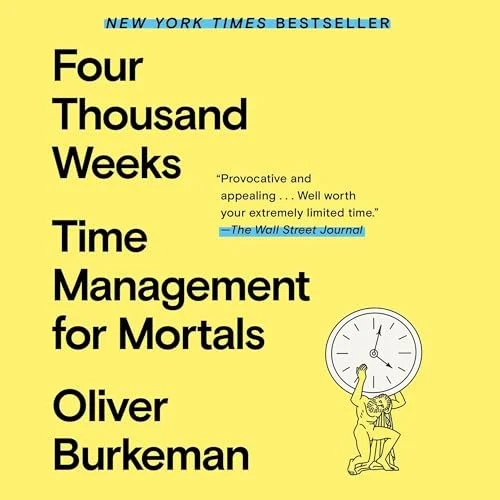
However, I recently read a productivity book by Oliver Burkeman called Four Thousand Weeks. I had lots of thoughts about this book and may come back to it in the blog (Burkeman's productivity philosophy happened to be just what I needed at this moment in time), but my special delight was the story of his personal journey. I mentioned after reading Nataly Kogan's book Happier Now that the reason I love reading happiness books is because there's always a discussion of how the author experienced the deep misery that inspired their happiness journey. I wasn't expecting that sort of journey in a book about productivity, so to find it was especially tasty.
Here is the paragraph of particular meaning, and as usual, I've added the relevant Needs in brackets:
What I had yet to understand was why all these [time management] methods were doomed to fail, which was that I was using them to try to obtain a feeling of control over my life that would always remain out of reach [autonomy]. Though I'd been largely unaware of it, my productivity obsession had been serving a hidden emotional agenda. For one thing, it helped me combat the sense of precariousness inherent to the modern world of work [safety]: if I could meet every editor's demand, while launching various side projects of my own, maybe one day I'd finally feel secure in my work and finances. But it also held at bay certain scary questions about what I was doing with my life [safety, autonomy, esteem], and whether major changes might not be needed. If I could get enough work done, my subconscious had apparently concluded, I wouldn't need to ask if it was all that healthy to be deriving so much of my sense of self-worth from work in the first place [esteem]. And as long as I was always just on the cusp of mastering my time, I could avoid the thought that what life was really demanding from me might involve surrendering the craving for mastery and diving into the unknown instead [safety]…. It had been more comforting to imagine that I might eventually "optimize" myself into the kind of person who could confront such decisions without fear, feeling totally in charge of the process [autonomy].
Burkeman never mentions feelings of depression—depression is only one signal that several of your Needs are not being met. One can still be put together, productive, or successful (he was a recognized productivity expert) and yet still feel miserable. Burkeman was trying to exercise his autonomy to impose a sense of security in his life, but eventually he came to understand that he'd have to make peace with his lack of control. This book, I think, is an expression of the process he went through to make that peace.
Anyway, you don't need to have gone through what Burkeman's gone through to enjoy the book. I think most people could find something of value from Four Thousand Weeks. For my part, I did a lot of skimming because I didn't feel like the author was talking to me (I have few of the problems he was arguing against), but the lessons I gleaned from it provided such a monumental shift in my perspective that I'm recommending the book to everyone I know. Have you recently had a helpful shift in perspective? What inspired it?